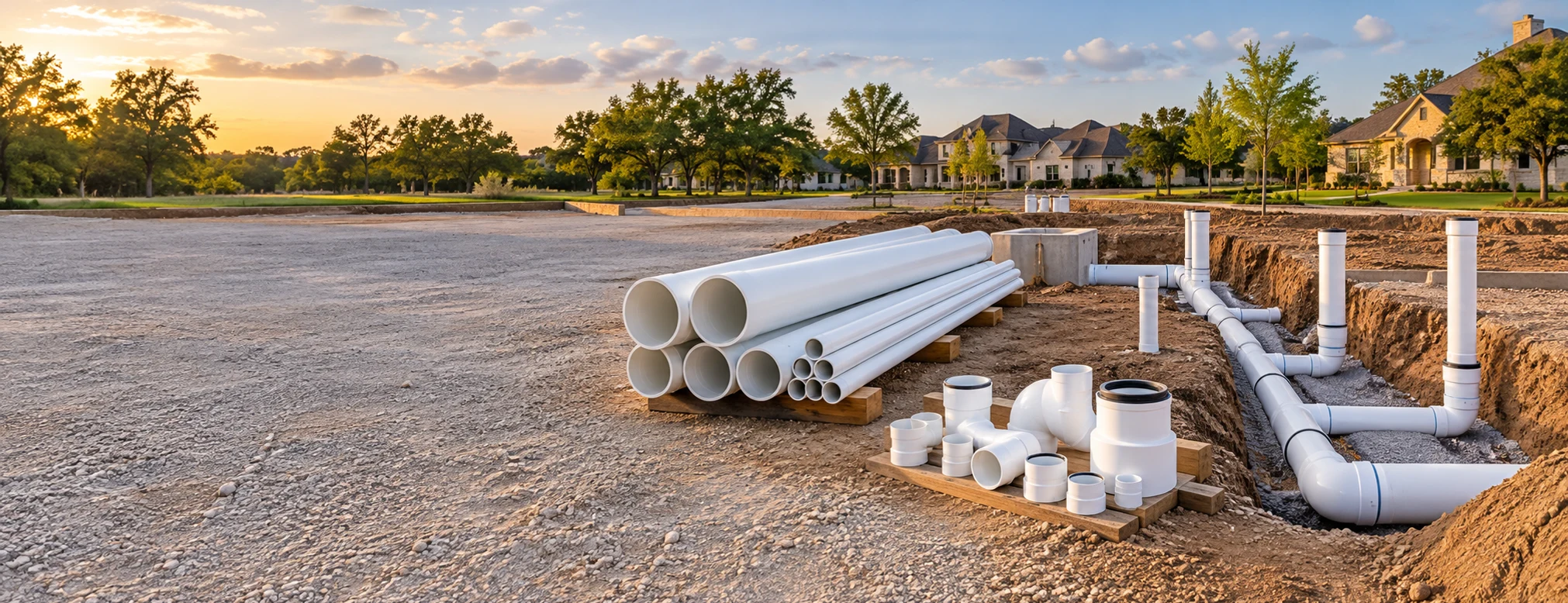
Plan water and sewer lines around the property
Identify whether the project involves new service routes, replacement of existing lines or a connection for an addition or accessory building. Share available utility records, surveys and plumbing plans. Confirm the intended use, connection points and design responsibilities rather than selecting a pipe route from photographs alone.
Separate private property piping from utility-owned facilities and public connection work. The responsible plumbing professionals and provider should confirm the proposed materials, capacities and connection requirements. Septic systems, gas piping and fire-protection systems require separately defined specialist scopes; they are not assumed to be included in a water-and-sewer package.
Coordinate trenching, crossings and service continuity
Define excavation, line installation, bedding, backfill and restoration responsibilities in the proposal without treating trenching as the whole plumbing scope. Identify crossings, existing improvements and access constraints. Utility notification, private-line locating and excavation protection must be planned by the responsible contractors before work begins.
For occupied properties, discuss how water or sewer interruptions will be authorized and coordinated. Keep utility-provider work, inspections and the licensed plumbing package visible as separate dependencies. Any unexpected line condition, damaged material or route change should have an agreed review and approval process.
Verify the completed scope before covering work
Discuss the testing, inspection and acceptance records required by the approved design, plumbing authority and utility provider. The responsible plumbing contractor should coordinate required checks before concealed work is covered. A finished trench surface is not evidence that a connection has been accepted or service is available.
Confirm who restores paving, landscape areas and adjoining finishes, and what remains outside the contract. Retain approved changes, inspection records and available installed-route information. For an urgent leak, suspected contamination or hazardous utility condition, contact the appropriate utility or emergency professionals instead of using a project-request form.
What to compare in a written proposal
- Private water and sewer routes, connection points and design scope
- Named licensed plumbing contractor and provider responsibilities
- Trenching, crossings, service interruptions and restoration
- Required tests, inspections, acceptance and installed-route records
Related Services & Resources
Find guidance for your city
Choose your city for local project questions and building-department resources. Confirm the authority for your property address before applying.