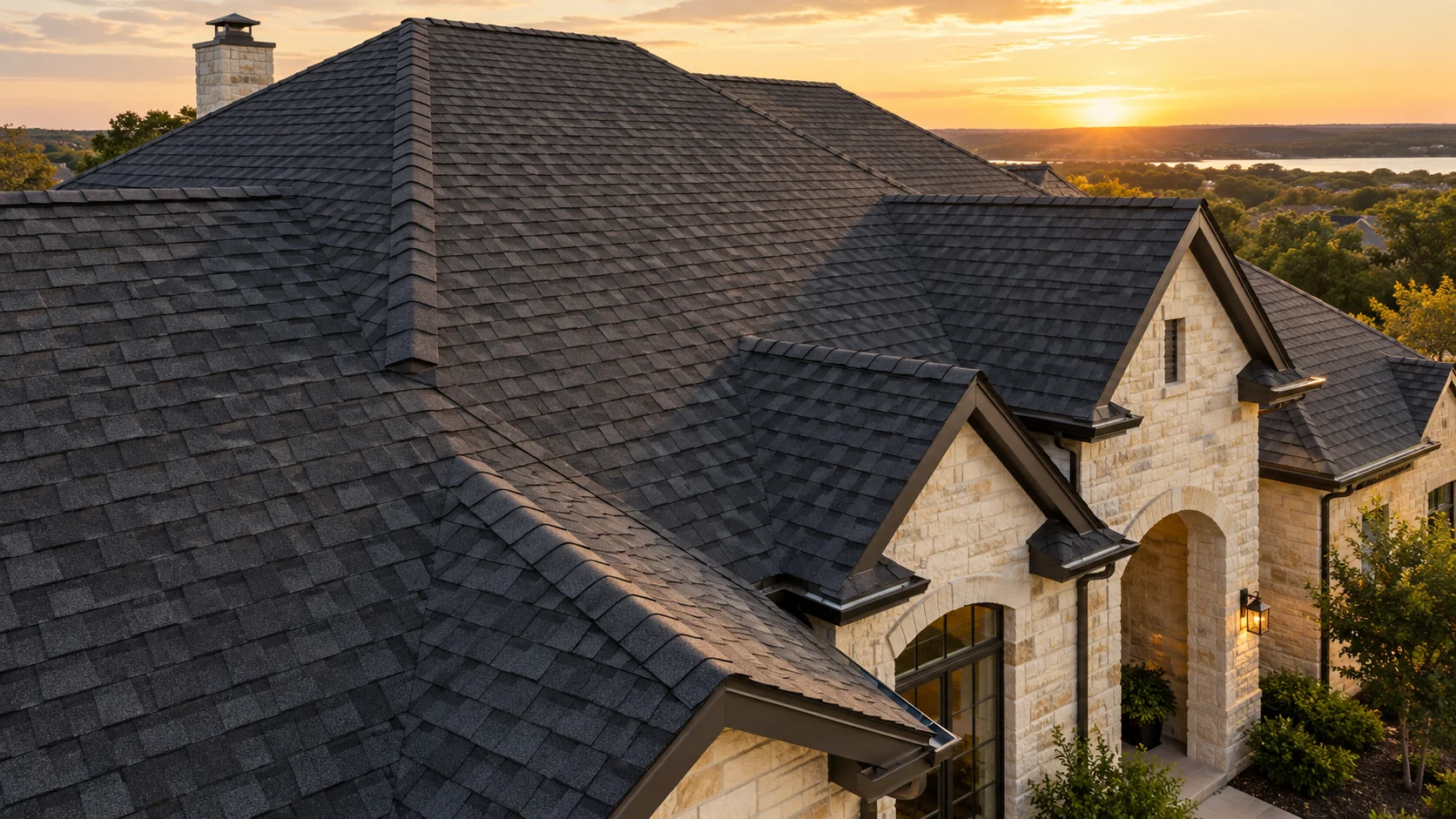
A dimensional look for the roof
Architectural shingles use laminated layers to create more depth than the repeating pattern of three-tab shingles. Color, shading and profile can change how the roof looks against brick, stone, siding and trim.
Compare the exact product on a sample board where possible. Appearance does not establish an impact or wind rating, and a color name alone may not match an older roof. Product documents and the condition of existing shingles matter when planning a partial repair.
The rest of the shingle roof
A replacement brings together shingles, underlayment, starter and ridge materials, flashing, roof edges and any ventilation work. These components need to be defined alongside removal and disposal of the old covering.
Decking or concealed flashing may need attention after tear-off. The proposal should explain how those findings will be handled and which roof-wall, chimney or vent details are included.
Selections and installation around your home
Finalize the product and color before ordering, including any required association review. Plan deliveries, driveway use, landscaping protection and cleanup with the contractor.
Retain the installed product information and written warranty documents. The exact product and installation requirements determine the coverage offered.
What to compare in a written proposal
- Exact product and color
- Removal and decking assumptions
- Flashing and ventilation scope
- Protection, disposal and written warranty documents
Related Services & Resources
Find guidance for your city
Choose your city for local project questions and building-department resources. Confirm the authority for your property address before applying.