
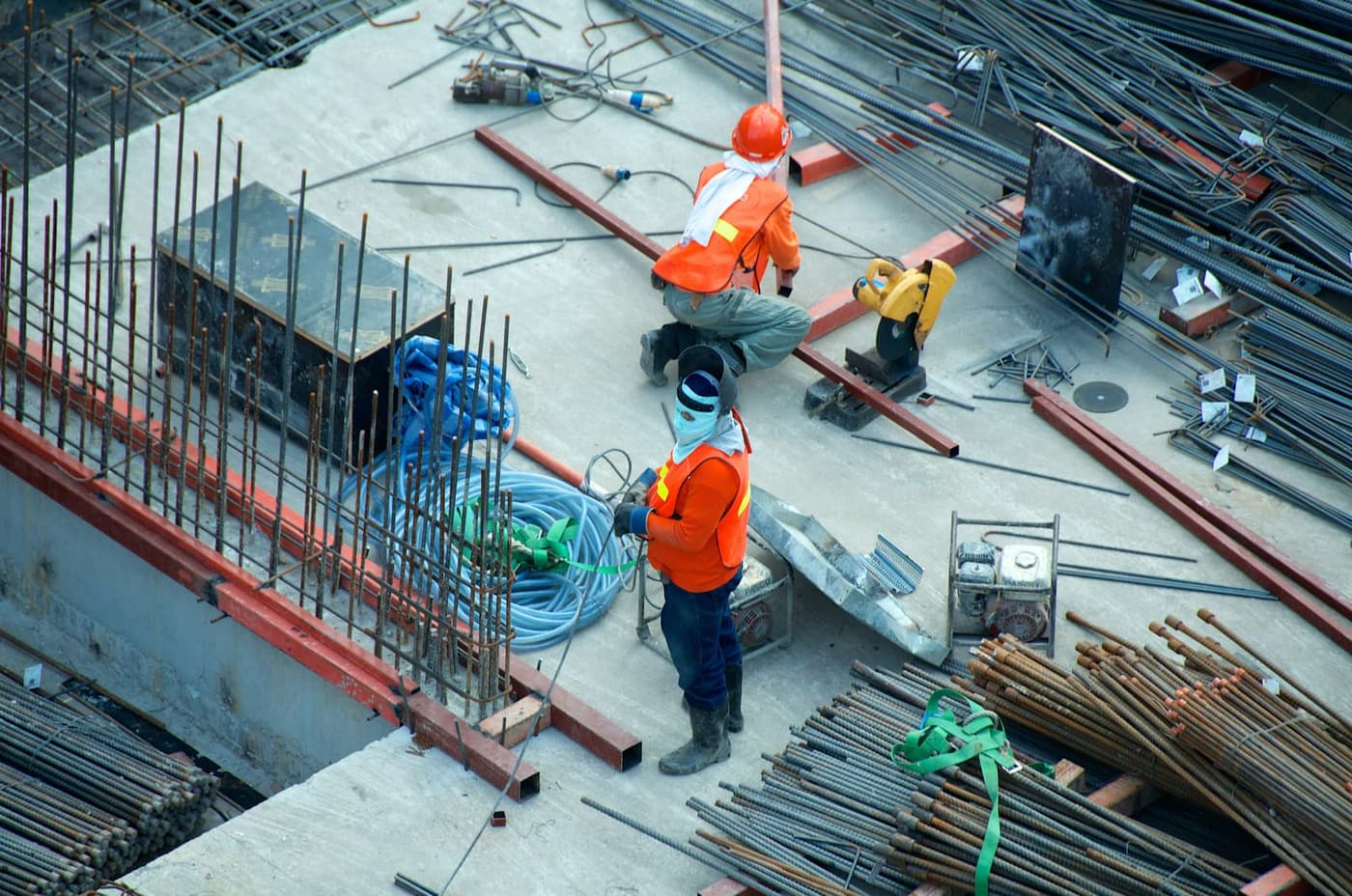
Commercial concrete crew preparing a sound repair edge on an industrial slab

Core Service Authority

Commercial Concrete

Commercial concrete repair and related scopes for slabs, docks, walks, and site elements—matched to condition and use.

What is Commercial Concrete?

Commercial concrete work should begin with the component’s purpose and condition—structural slab, foundation, pavement, curb, loading area, stair, or repair—then define investigation, design, preparation, placement, curing, joints, and operational protection accordingly.

Executive summary

Concrete is durable but not maintenance-free. Cracking, settlement, spalling, scaling, joint failure, moisture-related finish issues, and trip hazards can have different causes and therefore different repairs. In commercial facilities, the practical concern is often not appearance alone: it is forklift traffic, drainage, accessibility, loading, tenant safety, water management, or the interface with building systems. North Texas soils, heat, rain, and temperature changes can affect movement and drainage conditions, but site-specific evaluation is required before assigning cause. A responsible scope identifies whether work is structural or nonstructural, defines repair limits and substrate preparation, maintains access and drainage, and plans curing and protection around operations. Concrete placed without attention to jointing, finishing, curing, and traffic timing can create avoidable performance issues.

Key takeaways

  • Cracks should be evaluated by location, pattern, width, movement, and consequence; not all require the same response.
  • Structural concerns require appropriate engineering input rather than cosmetic repair alone.
  • Concrete repair depends on sound-substrate preparation, material compatibility, bonding, and curing.
  • Joint layout and joint maintenance help manage expected movement and protect slab edges.
  • Drainage and adjacent grade can contribute to pavement, slab, and foundation problems.
  • Loading docks, ramps, and walkways need sequencing that protects access, safety, and traffic operations.
  • ASTM material and test references may guide quality control, but project documents control the installed work.

Definitions

Spalling
Breaking, flaking, or loss of concrete near the surface, often associated with moisture, corrosion, impact, poor consolidation, or other deterioration mechanisms.
Control joint
An intentionally weakened plane that helps encourage shrinkage cracking to occur at a planned location.
Expansion joint
A joint that accommodates movement between concrete and adjacent construction or between separate concrete elements.
Subgrade
Prepared soil or aggregate support beneath a slab, pavement, or foundation element.
Curing
The controlled moisture and temperature process that supports cement hydration and helps concrete develop intended properties.

Assess the concrete condition and its consequence

Begin by identifying the element and its job. A warehouse slab supporting forklifts, a decorative exterior walk, a loading dock approach, a retaining element, and a foundation do not carry the same risk or accept the same repair. Document location, dimensions, crack patterns, elevation changes, water flow, surface wear, reinforcement exposure, prior repairs, and traffic. Determine whether the condition is creating a trip hazard, water intrusion, operational interruption, or a potential structural issue.

A crack is a symptom, not a diagnosis. It may reflect shrinkage, thermal movement, settlement, loading, restraint, corrosion, or an underlying design/detail condition. Some cracks can be monitored or sealed; others require further investigation before repair. If movement, differential elevation, significant distress, or structural capacity is in question, involve an appropriately qualified design professional. Cosmetic patching should not be presented as a structural solution.

Account for soil, heat, and drainage exposure

North Texas sites can experience expansive soil behavior, intense rainfall, drought cycles, and high pavement or slab temperatures. These conditions do not prove a particular cause at any property, but they make drainage, grade, joint condition, and movement history relevant to assessment. Water directed toward a building, clogged drains, failed sealant at joints, or utility leaks can undermine planned performance. The remedy may involve drainage correction, joint work, slab repair, or a combination.

Hot-weather placement needs deliberate planning. Concrete temperature, delivery timing, evaporation, finishing windows, curing approach, and protection from rapid moisture loss affect the work. Rain protection and access planning also matter. A schedule that ignores environmental conditions can increase the chance of surface defects or inadequate curing, especially for slabs and exterior flatwork.

Define repair depth, preparation, and material compatibility

Durable repairs start with removal to sound material, proper edge preparation, cleaning, and a repair material selected for the depth, orientation, exposure, and expected movement. A thin cosmetic topping over unsound concrete or a poorly prepared patch edge is unlikely to solve the underlying condition. For reinforced concrete, exposed steel, corrosion mechanisms, cover, and repair limits must be evaluated rather than concealed. The repair detail should include bond preparation, reinforcement treatment where required, placement, finishing, curing, and transition conditions.

Material names alone do not establish a good repair. Manufacturer instructions, compatible coefficients of movement, expected traffic, moisture condition, and cure requirements matter. ASTM references can inform testing, material properties, or installation control, while the project specification and design establish acceptance requirements. Owners should ask how the scope addresses the observed mechanism, not only which bagged product will be used.

Plan pavement, walks, ramps, and loading areas around use

Exterior concrete must serve pedestrians, vehicles, drainage, accessibility, and adjacent building systems. Slopes should direct water as designed; joints should be detailed and maintained; transitions should avoid creating trip points or abrupt vehicle impact. In loading or industrial environments, traffic paths, turning movements, point loads, dock equipment, and cure time need to be understood before work begins. Temporary routes and staged pours can keep a facility functioning while protecting new concrete.

For multifamily and retail sites, work around entrances, parking, accessible routes, landscaping, and resident or customer traffic requires clear communication and safe barricading. A repair plan should state which access routes will close, how long they will be affected, what temporary route will be available, and when the surface can safely accept the intended traffic.

Separate structural and operational decisions

Interior slabs and foundations may combine structural, moisture, flatness, and operational concerns. Before applying coatings, floor finishes, or leveling products, assess moisture conditions, substrate profile, cracks, joints, and compatibility with the intended finish. An industrial floor may tolerate a different appearance than a retail floor, yet both need reliable function. If a slab is moving or settling, surface preparation alone may not resolve the issue.

Foundation or retaining conditions deserve special care because the apparent damage can relate to soil, water, reinforcement, loading, or adjacent construction. Establish who is responsible for structural evaluation, waterproofing interfaces, excavation safety, and restoration. This is a scope where incomplete coordination can multiply cost and disruption.

Control placement and preserve repair records

Before placement, verify forms, reinforcement, embeds, subgrade, drainage, access, and pour sequencing. During work, follow specified quality controls for delivery, placement, consolidation, finishing, joints, curing, and protection. The precise controls depend on the project; simply copying a checklist from an unrelated pour is not enough. Document conditions that affect final performance and address deviations while they can still be corrected.

Closeout should include repair locations, materials, joint layouts where relevant, cure/protection information, and maintenance needs. Facilities teams benefit from knowing which patches are intended to be monitored, which joints need periodic sealant attention, and what traffic or chemical exposures were assumed. That record supports future repairs and capital planning.

Commercial concrete response paths

The observed condition must be evaluated in the context of the element’s function.

Commercial concrete response paths
ConditionPotential responseDecision point
Localized spallRemove unsound material and install compatible repairIs deterioration limited and reinforcement sound?
Crack at joint or wallEvaluate movement and seal/detail appropriatelyIs it active, structural, or allowing water entry?
Uneven walk or pavementRepair, replace panel, or address support/drainageIs accessibility or trip risk present?
Broad slab distressInvestigate loading, support, moisture, and structural conditionsCan a surface repair serve the intended use?

Concrete scope sequence

  1. Step 01

    Classify the element

    Determine structural role, traffic, drainage, and consequence of failure.

  2. Step 02

    Document distress

    Map cracks, spalls, elevation, moisture, and history.

  3. Step 03

    Resolve cause questions

    Escalate structural, soil, or water concerns as needed.

  4. Step 04

    Detail repair and phasing

    Specify preparation, materials, joints, curing, and access.

  5. Step 05

    Inspect and hand over

    Record work and maintenance assumptions for operations.

What we do

How AmeriConstruction delivers commercial concrete

AmeriConstruction evaluates commercial concrete conditions by element function: structural role, traffic, drainage, accessibility, and water exposure. Repair or replacement recommendations follow observed distress and use requirements rather than a one-size patch approach.

Capabilities

  • Slab and pavement repair coordination
  • Dock and high-traffic area work
  • Walk and accessibility-related repairs
  • Joint and drainage interface attention
  • Phasing for active facilities

How we work

A clear process from discovery through closeout, so stakeholders know what happens next.

  1. 01

    Condition classification

  2. 02

    Repair detailing

  3. 03

    Execution

  4. 04

    Handover

Service area

Commercial Concrete across North Texas

This authority guide covers the service discipline. Explore related service and market pages for local delivery context.

Frequently asked questions

Clear answers to common project questions.

When should commercial concrete be repaired versus replaced?+

Direct answer

Repair localized sound distress; investigate or replace when support, safety, drainage, or widespread failure make surface repair unreliable.

View in FAQ hub

Commercial Resource Center

Guides for facilities and commercial owners

Planning, budgeting, delivery methods, preconstruction, permitting, and occupied renovations, separate from the general Knowledge Center.

Why owners trust AmeriConstruction

Credentials

GAF Certified™ contractor. Insured, with bonding available on a project basis when requested.

Service area

Dallas, Collin, Denton, Tarrant, Grayson, and Fannin Counties, plus major Metroplex cities.

Contact

972-645-1654 · Mon - Sun 9:00 am - 6:00 pm · Offices in Pottsboro, Plano, and Pilot Point.

Proof

Documented project experience, client testimonials, and Knowledge Center guidance for owners and managers.

What clients say

Fantastic work done to spec, neat and efficient, no damage to exteriors or landscaping, and no changes to costs! It was a pleasure doing business with AmeriConstruction.

Tom G.

What a wonderful company to work with and especially Trevor. He was so easy to work with. Explained all information on a level where I could understand. Extremely polite and courteous. Would highly recommend.

Ruth K.

Love this company! Very professional and polite. They helped navigate the full process with my insurance company and took the time to walk me through everything they would be doing with my roof.

Lori P.

Request this service

Tell us about your property and goals. Upload plans for commercial scopes if available.

Ready to discuss commercial concrete?

Request a quote or call the team. Share plans if you have them, especially for commercial and multifamily scopes.

GAF Certified™ Roofing Contractor · Fully Insured · Offices in Pottsboro, Plano & Pilot Point, TX