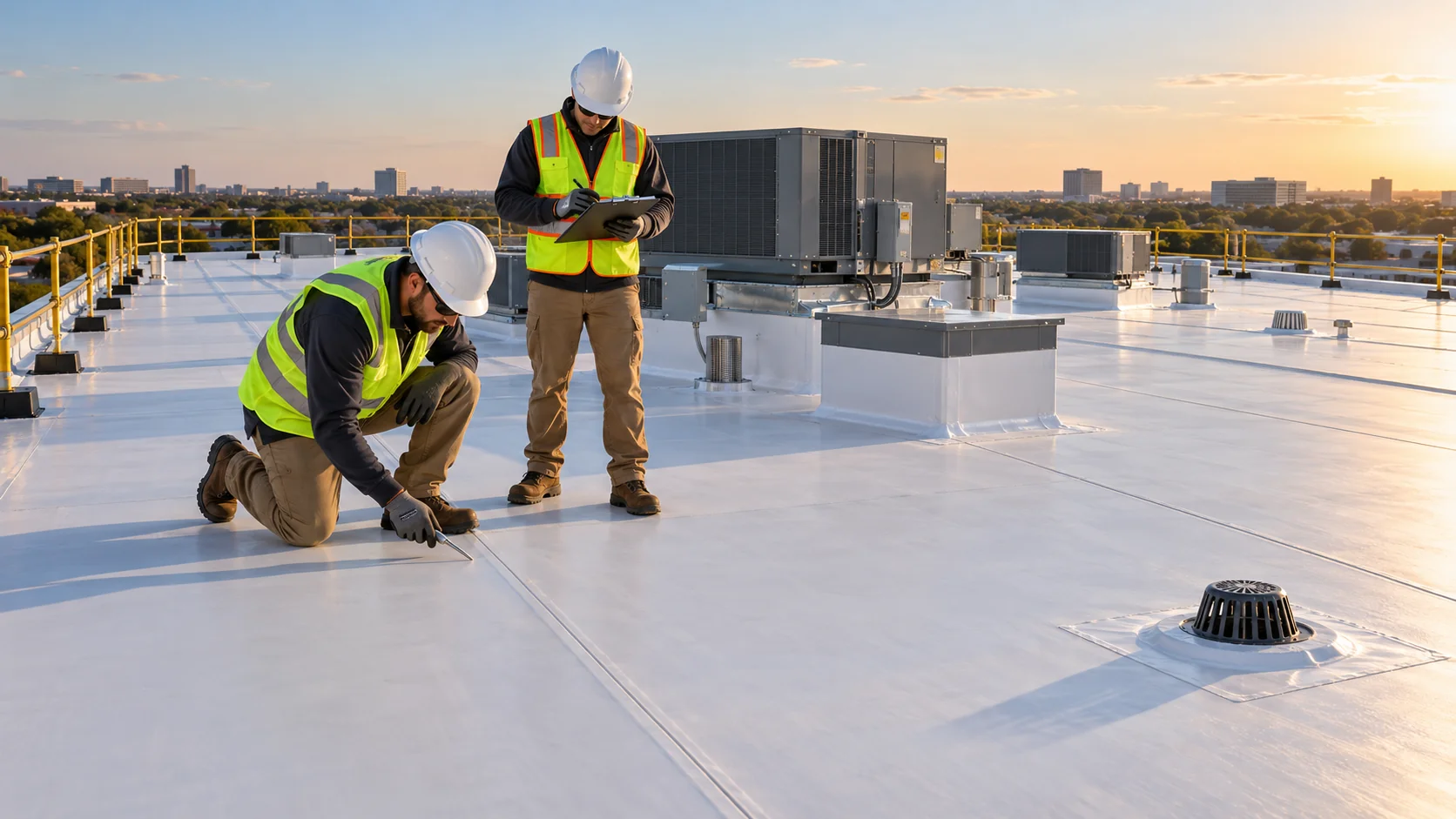
Separate surface performance from whole-building performance
The U.S. Department of Energy explains that cool roofs reflect more sunlight than conventional roofs. The effect on building energy use depends on climate, insulation, roof construction and heating and cooling conditions. A lower roof-surface temperature is not the same as a measured reduction in annual operating cost.
Ask the energy analyst to state the existing roof, proposed roof and operating assumptions when modeling savings. An unconditioned warehouse and a continuously cooled occupied space should not receive the same savings promise.
Compare the actual rated product
Look up the exact product, color and applicable rated values. Ask whether the proposal uses initial or aged performance and which values matter to the project. Cool surfaces are available in multiple roof-material categories; “white membrane” is not a complete product specification.
ENERGY STAR directs owners to Cool Roof Rating Council resources for roof product information. Product ratings support comparison, while applicable local requirements still need project-specific confirmation.
Evaluate a coating on its own merits
A reflective coating is worth considering only after the existing roof is evaluated for compatibility and condition. Johns Manville identifies different substrates for its acrylic and silicone coating products; a coating chosen for one roof should not be assumed suitable for another.
Ask whether the scope includes necessary repairs, preparation, drainage work and future maintenance. Keep the purpose of the coating clear: surface restoration, reflectivity or both.
Put the decision in the replacement plan
When reroofing is already required, compare insulation, roof surface and moisture-control choices together. Request a written explanation of the proposed energy benefit, its assumptions and any trade-offs. That provides a more useful decision than an unsupported payback period or universal percentage saving.