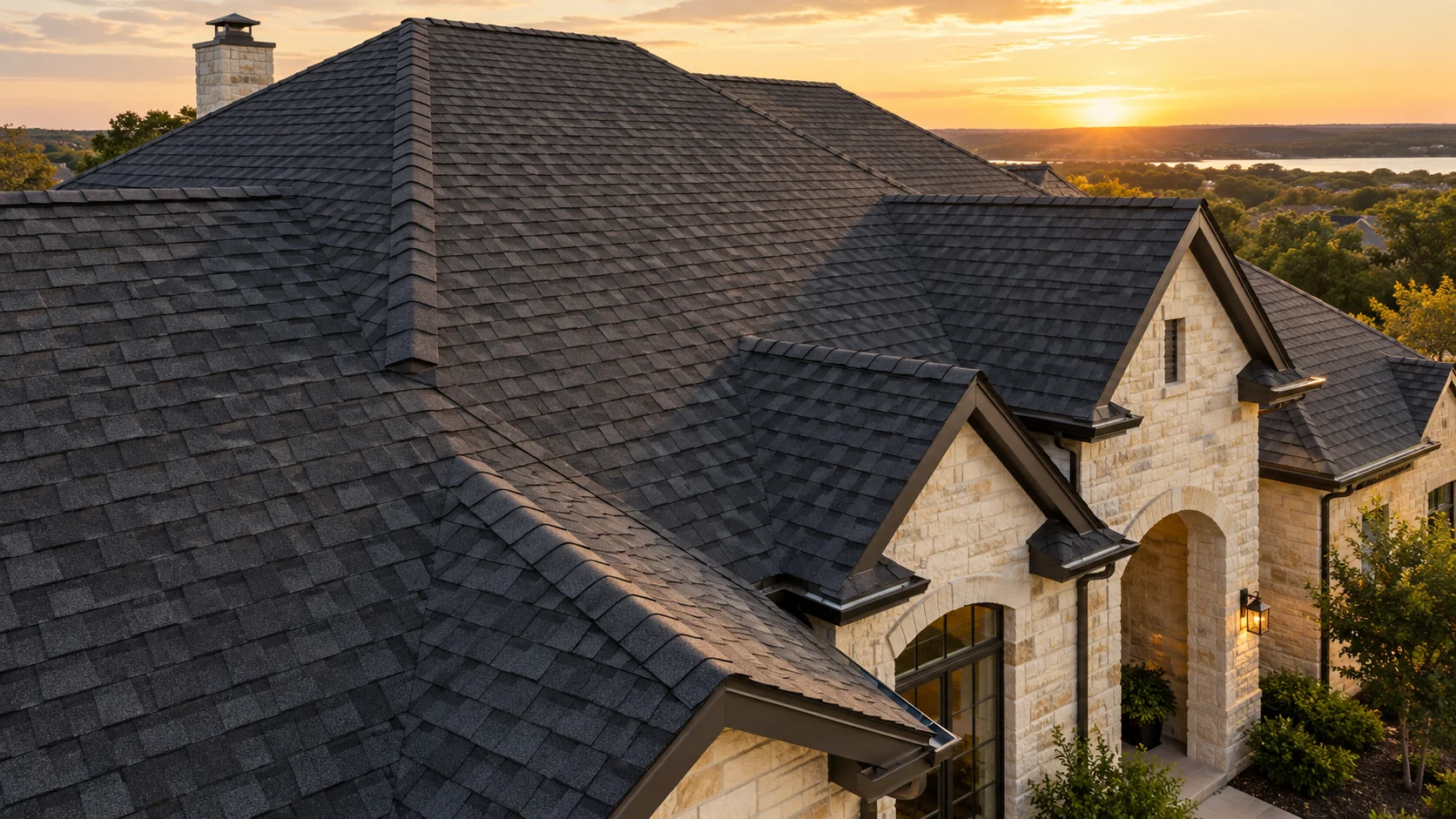
Evaluate samples at the scale of the house
Compare material texture, color variation and profile with the brick, stone, siding and trim. GAF’s design guidance distinguishes shingle appearance options; the final choice should be reviewed with actual product samples in the home’s setting.
For metal panels, agree on panel width, seam profile, finish and visible trim. Discuss expected appearance before ordering, including oil canning—the waviness that can be visible in flat metal-panel areas. McElroy identifies it as a characteristic affected by several material and viewing conditions.
Detail the difficult transitions early
Ask the design and roofing team to review dormers, intersecting roof planes, chimneys, skylights and any change from shingles to metal. A drawing should show how water continues through each transition, including where a roof ends against a wall.
PNNL’s guidance explains the role of integrated step and kick-out flashing at roof-wall intersections. On a design-sensitive home, resolve how those functional details fit the desired appearance before exterior finishes conceal them.
Coordinate the trades that touch the roof
Assign responsibility for gutters, ventilation, skylights, lightning protection and future solar equipment if they are part of the project. Ask who supplies and installs each component, and who approves changes to a visible detail.
- Approve product, color and finish names in writing.
- Review conspicuous edge and ridge details with the designer.
- Identify any association or architectural approval needed before ordering.
- Agree on how concealed decking or flashing issues will be priced and approved.
Use the closeout to preserve the design decisions
Keep the final material schedule, product data and photographs of details before they are concealed. Record any substitute approved during construction. The information will help future repairs match the roof and avoid unplanned changes to its appearance.