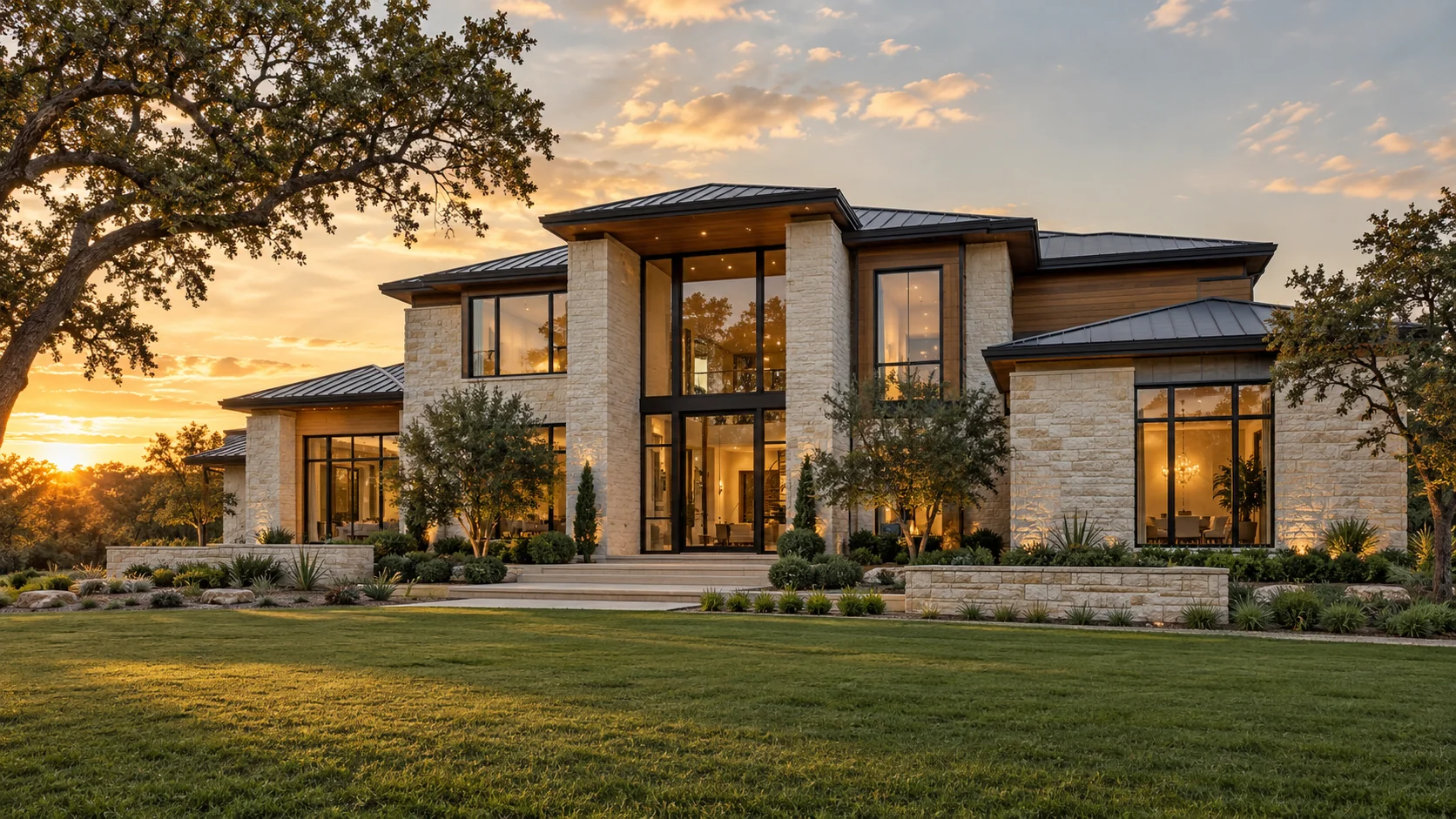
Materials that fit the home
Review roof color, texture and profile with the home’s stone, brick, siding, windows and trim. Actual product samples help establish how the selection will look in the property’s setting.
Architectural shingles provide a layered appearance, while standing seam metal creates a panel pattern. Mixed materials can be considered where the roof design and compatible transition details support them; the exact scope should identify the products used on each area.
Details at complex rooflines
Dormers, chimneys, valleys, intersecting roof planes and roof-to-wall connections need deliberate flashing and drainage details. The plan should show how water moves through those transitions and how the finished edges will look.
Roofing may need to be coordinated with gutters, masonry, skylights or exterior finishes. Identify the work at those connections before installation so necessary access and trade responsibilities are included.
Protect the property and preserve the selections
Plan deliveries, staging and protection for landscaping, finished surfaces and occupied areas. Agree on any architectural or association approvals before materials are ordered.
Keep the final material selections, approved changes, concealed-detail photographs and written warranty documents. A clear record supports future repairs that respect the original roof design.
What to compare in a written proposal
- Coordinated material selections
- Detailed roof and wall interfaces
- Special fabrication assumptions
- Property protection and system records
Related Services & Resources
Find guidance for your city
Choose your city for local project questions and building-department resources. Confirm the authority for your property address before applying.