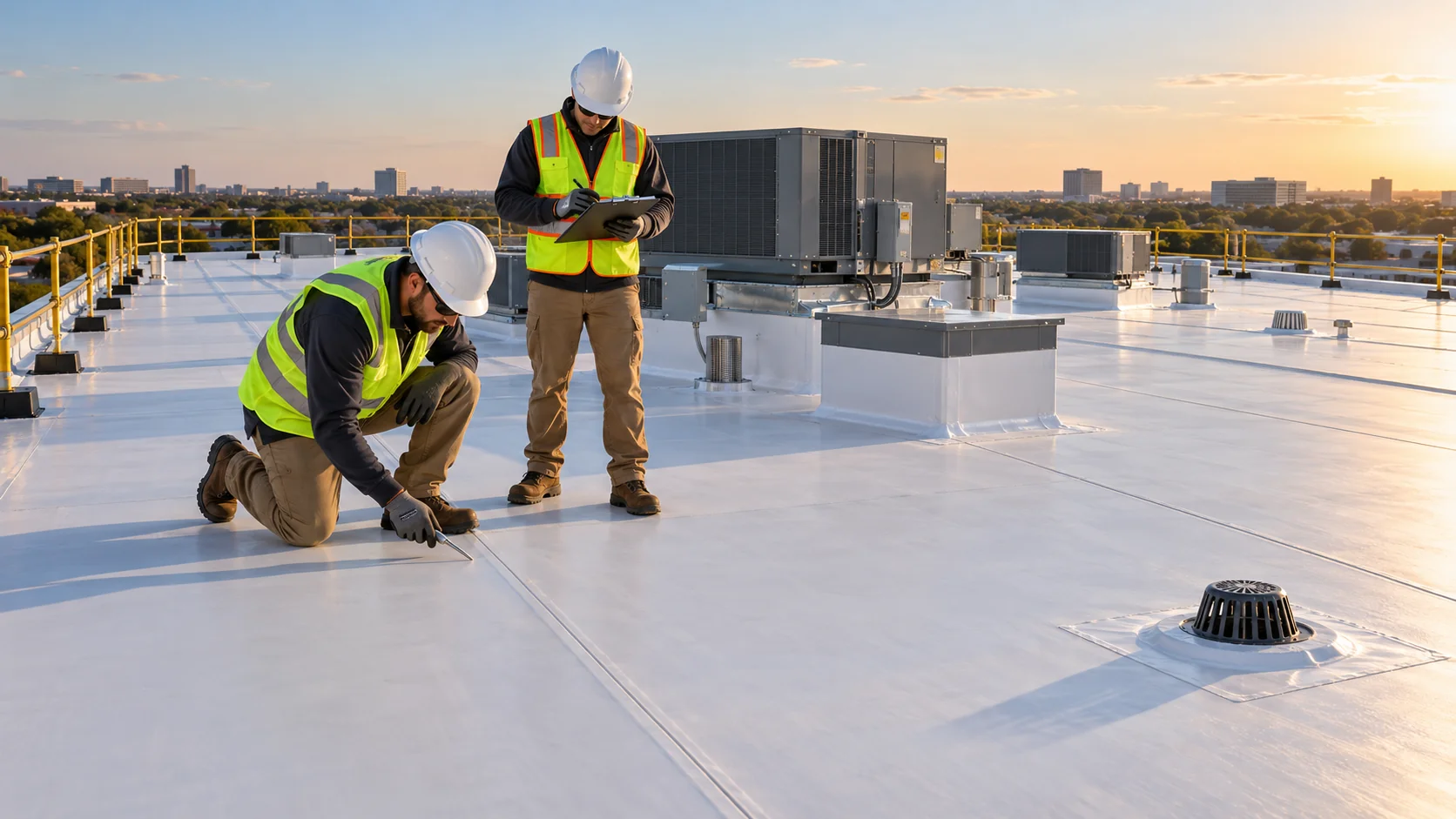
The membrane and the water path
A low-slope roof needs its covering, drains or edge outlets, and connections around walls and equipment to work together. Persistent wet areas may involve debris, a low area or another drainage issue; changing the surface alone may leave that cause unresolved.
A roof assessment reviews the covering and visible details alongside leak history and the drainage route. Concealed insulation or deck concerns may need further investigation before the repair or replacement scope can be set.
Choose repair or a new roof system
Localized defects may be repairable when the surrounding roof is suitable. More extensive deterioration can lead to a comparison of replacement options using TPO, PVC or modified bitumen and the associated insulation and flashing.
A proposed coating or recover relies on an acceptable existing roof. The recommendation should explain what can remain, which deficiencies need correction and how the new work connects at drains, edges and equipment.
Work around the occupied building
Low-slope commercial roofs often share space with serviced equipment. Coordinate access, work zones, staging and equipment-trade responsibilities with the facilities team.
Discuss daily weather protection and sensitive areas below the roof before work begins. Keep the final roof layout and maintenance requirements available to anyone who will service equipment afterward.
What to compare in a written proposal
- Deck and insulation assumptions
- Membrane and attachment scope
- Drainage and transition details
- Operating-property protection
Related Services & Resources
Find guidance for your city
Choose your city for local project questions and building-department resources. Confirm the authority for your property address before applying.